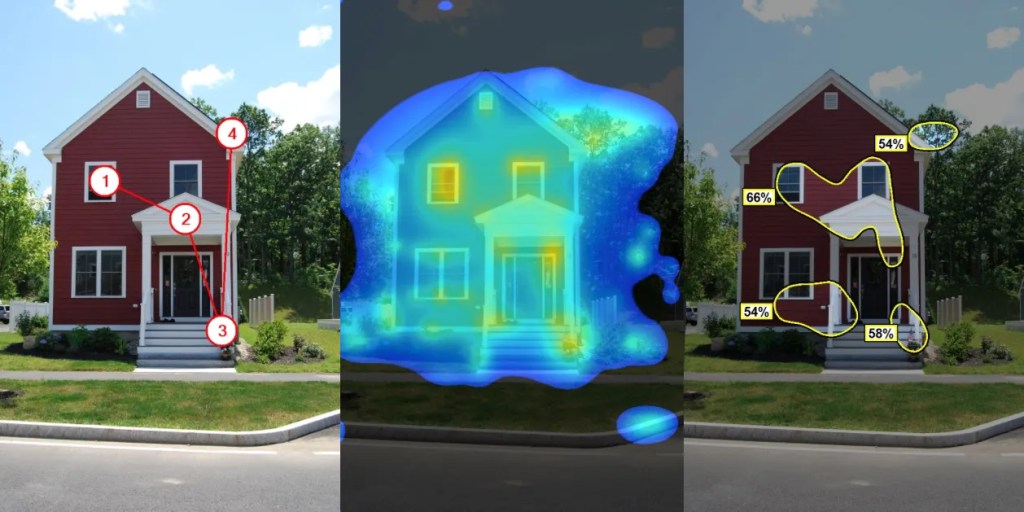
Welcome to the Object Biometrics website! This website is the demo version of a digital platform that will analyze 3D recordings of like objects to identify their dissimilarities and consider the meaning of those dissimilarities. Many of the objects we encounter in our world, from our clothes to our coins, are meant to serve the same function and, consequently, take on a similar form. It is easy to overlook the differences among these objects when their appearance to the naked eye is so similar. But differences matter. These differences can tell us about the gradual adaptations of an object to its function – its morphology – over time – not unlike the way evolution works. In modern contexts, they can tell us about the decisions that individuals make to objects that are meant to be – but are not truly – similar, revealing the agency of humans despite the context of serial production.
This platform is centered on fast-growing LIDAR technology, a way of quickly and accurately measuring objects and environments both large and small to within a millimeter. Once a technology reliant on cumbersome and expensive equipment, LIDAR is now technology being affordably incorporated into popular and ubiquitous devices like the iPhone, paving the way for more and more people to become measurers and analysts of the objects around them. Rooted in extensive LIDAR research and development in the areas of point cloud and planar-based visualization and comparison, Object Biometrics utilizes and expand on existing software like Cloud Compare and Potree and data libraries including the Point Cloud Library and OpenCV through surface matching, feature detection, object recognition, and other computer vision algorithms to study both the cloud and mesh files from our analyses.
This website will serve as the first ever open-source platform to analyze the difference between similar – but different – objects. It is rooted in a proprietary and analytical digital technology developed at the University of Rochester. This technology was beta tested through three multi-institutional pilot projects with museum partnerships, including the Rochester Museum and Science Center, the New York State Museum, and the Museum of Modern Art. The platform will resonate with scholars, industry and private individuals in equal measure. It will have the functional capacity to address critical and cutting edge question within a wide range of fields, from archaeology and traditional crafts to architecture, and objects produced in assembly lines. The Object Biometrics platform, housed at the University of Rochester’s Institute for Public Humanities and Creative Scholarship will greatly expand the capacity for anyone to analyze spatial data.
 ipcsrochester.com